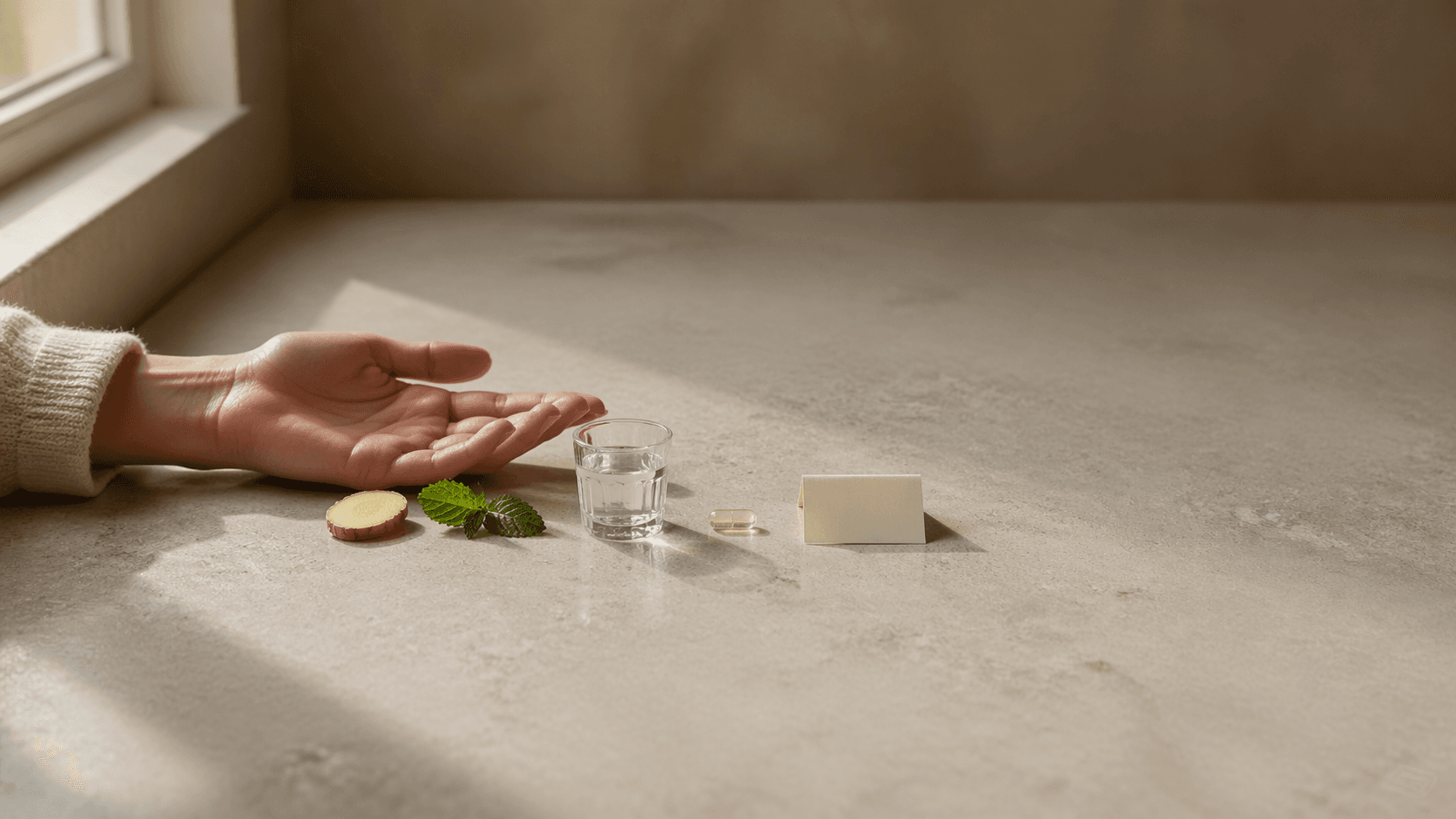
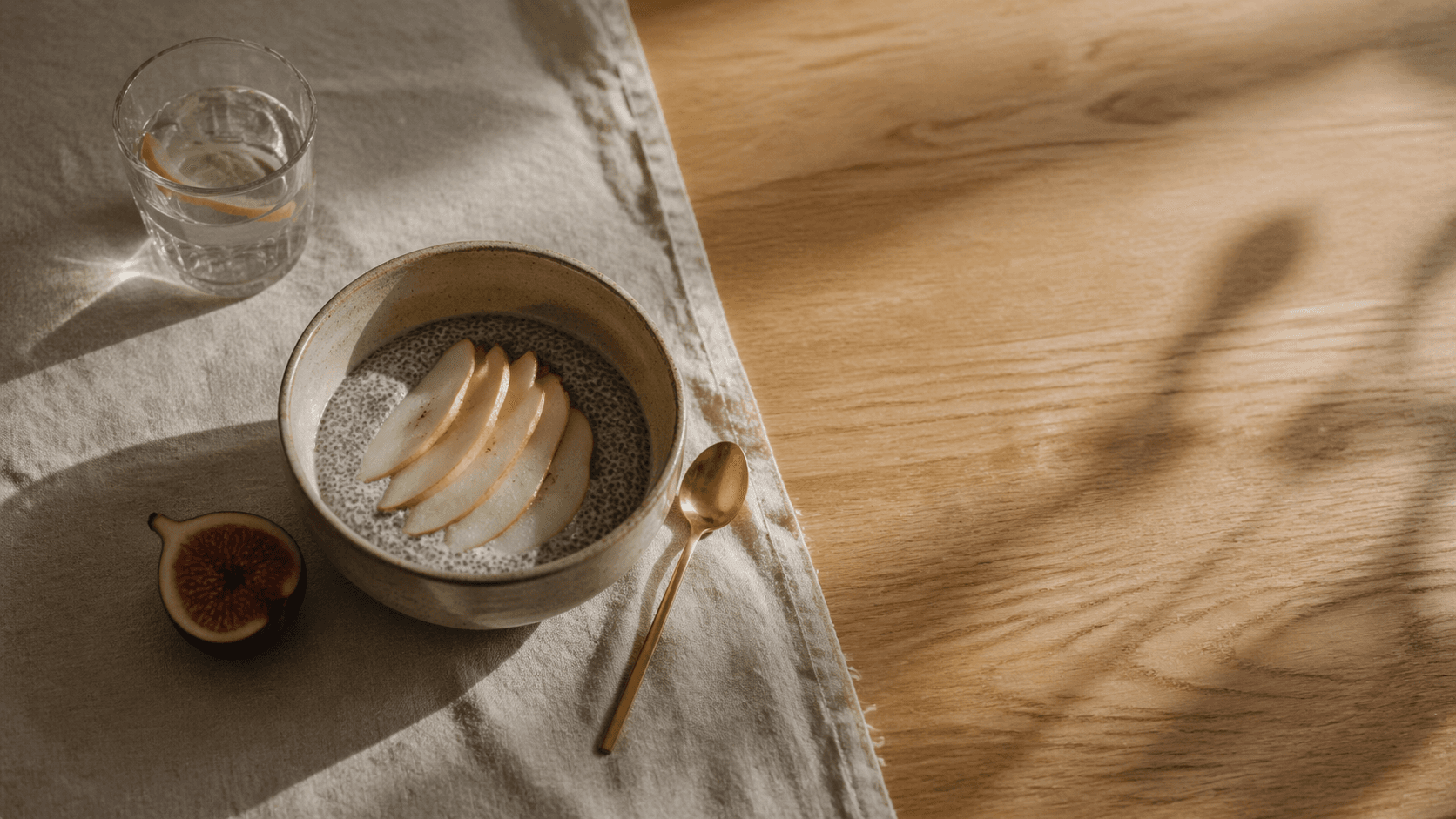
Nausea is the side effect almost every GLP-1 user meets in the first week. In the STEP 1 trial of semaglutide 2.4 mg (Wilding et al., NEJM 2021), about 44% of participants reported nausea. In SURMOUNT-1 tirzepatide trials (Jastreboff et al., NEJM 2022), rates ran 24-33% depending on dose. On oral orforglipron, ATTAIN-1 reported nausea in roughly 29-34% across doses.
The good news: most GLP-1 nausea is manageable without medication, softens substantially after the first 4-8 weeks on a stable dose, and responds well to a handful of evidence-based strategies.
Here's the protocol.
Why GLP-1s Cause Nausea
Two mechanisms:
- 1.Delayed gastric emptying. Food sits longer in the stomach. For many patients, that triggers a "too full" signal that translates into nausea, especially after larger or fattier meals.
- 2.Direct brainstem signaling. GLP-1 receptors in the area postrema (the brain's "vomiting center") contribute to appetite suppression and nausea directly.
Both mechanisms peak in the first weeks of therapy and after each dose escalation, then attenuate as the body adapts.
Key Takeaway: Nausea is the clearest signal that your stomach is emptying slower than it's used to. Every strategy that works reduces stomach contents or buffers that signal.
10 Tips That Actually Work
1. Eat smaller, more frequent meals
Instead of three 500-calorie meals, try five 200-300-calorie mini-meals. Reduces the gastric load at any given time. This is the single most effective dietary intervention.
2. Avoid fatty, fried, and greasy foods
Fat slows gastric emptying further. During flare periods, pivot to lean protein, rice, and simple carbohydrates. The "BRAT" diet (bananas, rice, applesauce, toast) is a reasonable template during the worst days.
3. Eat protein first
Starting a meal with lean protein (chicken, fish, Greek yogurt, eggs) blunts post-meal blood sugar swings and tends to produce less nausea than starting with carbs.
4. Hydrate steadily — but not with meals
Drinking large volumes with meals adds to gastric distention. Sip water between meals instead. Aim for 80+ oz daily.
5. Ginger (500-1,000 mg daily)
Meta-analysis evidence is strongest for chemotherapy-induced and pregnancy-related nausea, but the mechanism (peripheral 5-HT3 antagonism, motility enhancement) applies to GLP-1 nausea. A 2019 meta-analysis of 10 RCTs (Chang & Peng, Cancer Nurs 2019) found ginger reduced acute nausea with OR 0.60 vs placebo. Use real ginger capsules, ginger tea, or crystallized ginger — not sugary ginger ale.
6. Vitamin B6 (25-50 mg daily)
B6 has strong meta-analysis-level evidence for nausea in pregnancy (Jayawardena et al., Arch Gynecol Obstet 2023). ACOG recommends 10-25 mg three to four times daily. The mechanism (modulation of neurotransmitter synthesis) is plausibly applicable to GLP-1 nausea.
7. Peppermint
Peppermint tea or enteric-coated peppermint oil relaxes GI smooth muscle and reduces nausea in multiple small trials. A simple, low-risk addition.
8. Electrolyte support
Mild dehydration amplifies nausea. Sodium, potassium, and magnesium stabilize nausea thresholds. If water alone isn't working, add an electrolyte product like SQ[1] Hydrate.
9. Inject at night
Your personalized nausea protocol is ready in 60 seconds.
Build my protocol →Many patients find injecting before bed means sleeping through the peak-nausea window (12-36 hours post-injection). Adjust timing with your prescriber.
10. Acupressure wristbands (P6/Neiguan point)
Low-cost, low-risk. Mixed trial evidence, but some patients get meaningful relief from sea-bands or similar devices.
Key Takeaway: Smaller meals + low-fat food + ginger + B6 + electrolytes resolves the majority of GLP-1 nausea. Prescription antiemetics should be reserved for refractory cases.
Foods to Avoid During Flares
- Fried, greasy, or fatty foods
- Very spicy dishes
- Large salads with dense raw vegetables
- Carbonated beverages
- Alcohol
- Strong-smelling foods (if smells trigger you)
Foods That Usually Go Down Well
- Plain chicken, turkey, or white fish
- Greek yogurt
- Scrambled eggs
- Rice, plain pasta
- Bananas, applesauce
- Crackers, toast
- Bone broth
- Cottage cheese
When to Call Your Doctor
- Vomiting more than twice in 24 hours
- Unable to keep fluids down for 12+ hours
- Signs of dehydration (dark urine, dizziness, rapid heartbeat)
- Severe abdominal pain, especially radiating to the back (pancreatitis concern)
- Nausea worsening beyond week 6 instead of improving
The Timeline
- Week 1-2: Peak nausea, especially 24-72 hours after injection.
- Week 3-8: Gradual adaptation. Most patients see 50-70% reduction.
- Week 8-12: On a stable dose, nausea typically becomes mild or absent.
- Dose escalations: Expect 7-14 days of flare after each titration.
FAQ
Does GLP-1 medications cause less nausea than GLP-1 medications?
SURMOUNT trials showed slightly lower nausea rates for tirzepatide than STEP trials for semaglutide at comparable doses, but individual variation is bigger than drug-to-drug differences.
Can I take Zofran with my GLP-1?
Ondansetron (Zofran) is sometimes prescribed for refractory GLP-1 nausea. Discuss with your prescriber — it's effective but not a long-term solution.
Will I get used to the nausea eventually?
In 80-90% of patients, yes — the body adapts within 4-8 weeks on a stable dose. Dose escalations restart the cycle briefly.
Does ginger really work?
Meta-analysis data supports ginger for acute nausea across multiple contexts. It's unlikely to eliminate severe GLP-1 nausea alone, but it meaningfully softens moderate nausea for many users.
Should I take B6 and ginger together?
Yes — different mechanisms, well tolerated together, both safe at recommended doses.
This article is for educational purposes only and is not a substitute for medical advice. Severe or persistent nausea requires clinical evaluation.
These statements have not been evaluated by the Food and Drug Administration. SQ[1] products are not intended to diagnose, treat, cure, or prevent any disease.
Settle your stomach on GLP-1. Explore SQ[1] Hydrate and Daily — electrolytes and B6 in formulas built for the GLP-1 context.