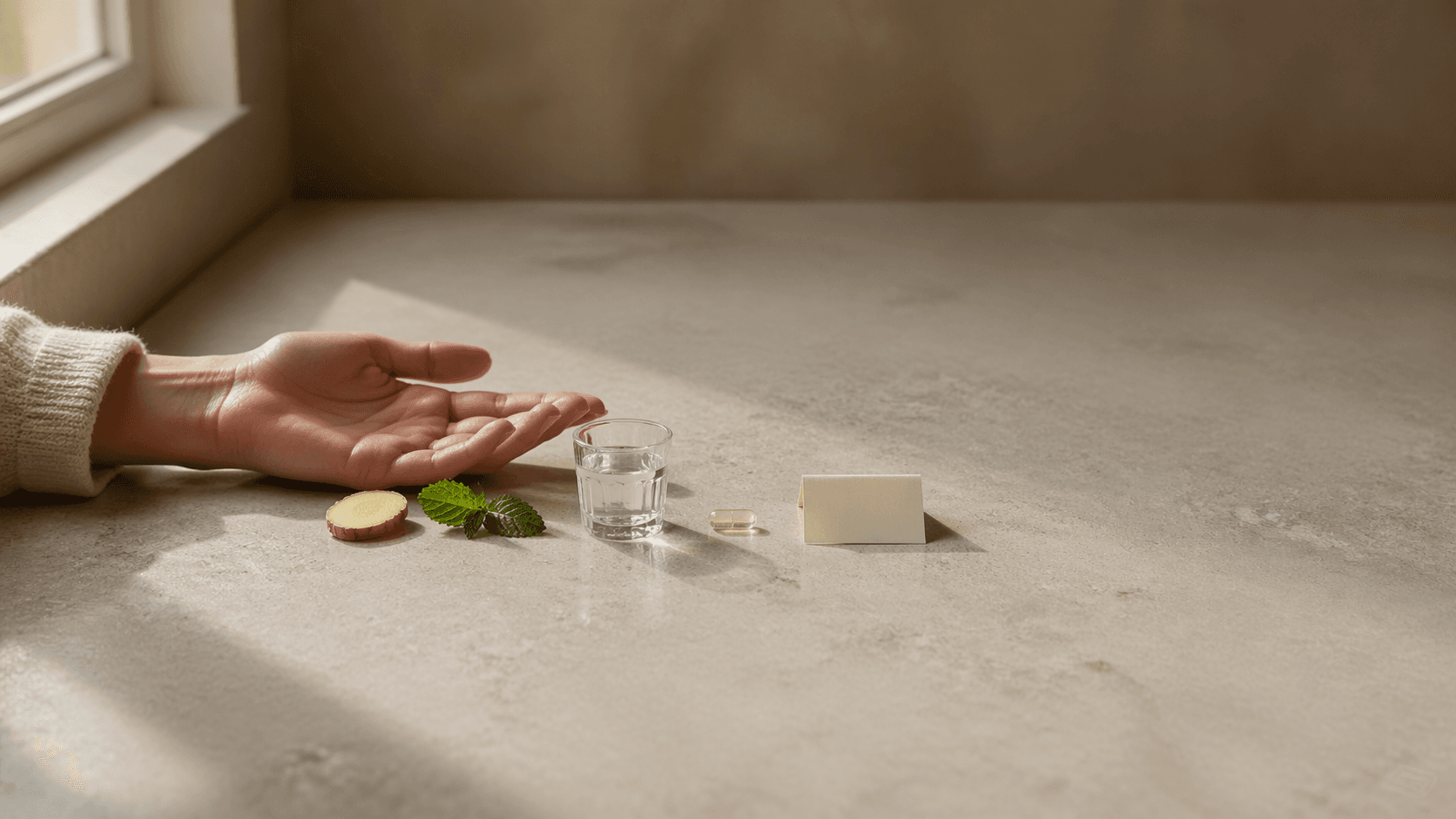
There are a lot of unpleasant things people warn you about before starting a GLP-1. Sulfur burps are the one nobody mentions until day three, when you're in a meeting and suddenly tasting what can only be described as warm rotten eggs at the back of your throat.
Scroll r/GLP-1 medications on any given week and you'll find dozens of posts that all read basically the same: "WHY DOES IT SMELL LIKE THIS." The reactions range from horrified to resigned to darkly funny. And while sulfur burps are technically a low-incidence adverse event in clinical trials — Lilly's data puts burping at roughly 2-3% across the 5/10/15 mg tirzepatide doses — every prescriber knows the real-world rate is much higher. It's just that "belching" in a trial dataset and "tastes like a truck stop bathroom" in real life are the same line item.
This article explains exactly why it happens, what makes it worse, and the evidence-based ways to stop it.
What Are Sulfur Burps, Exactly?
Sulfur burps are eructations (the medical term for burps) that contain hydrogen sulfide gas. Hydrogen sulfide is the chemical responsible for the distinctive smell of rotten eggs, sewer gas, and — unfortunately — certain flatulence. When you burp it up from your stomach, the smell carries into the throat and nose.
Hydrogen sulfide is produced by specific gut bacteria when they ferment sulfur-containing compounds in food. The sulfur sources that matter most are:
- Animal protein (red meat, chicken, eggs, fish)
- Cruciferous vegetables (broccoli, cauliflower, Brussels sprouts, cabbage, kale)
- Allium vegetables (garlic, onions, leeks)
- Dairy (milk, cheese, yogurt, whey protein)
- Sulfite preservatives (wine, dried fruit, processed meats)
In a healthy digestive tract, food moves through quickly enough that these bacteria don't have time to produce much hydrogen sulfide. On a GLP-1, that changes.
Why GLP-1s Cause Sulfur Burps: The Real Mechanism
Semaglutide and tirzepatide both work in part by delaying gastric emptying — slowing the rate at which food leaves the stomach. This is one of the core mechanisms that drives appetite suppression and weight loss. It is also the single mechanism that drives nearly every GI side effect, including sulfur burps.
Here's what happens step by step:
- 1.You eat a meal containing sulfur-rich foods.
- 2.Normally your stomach would empty that meal in 2-4 hours. On a GLP-1, that extends to 4-8 hours or more.
- 3.The extended dwell time gives sulfur-reducing bacteria (which include certain Desulfovibrio, Proteus, and some E. coli strains) the opportunity to ferment the sulfur compounds.
- 4.The byproduct is hydrogen sulfide gas, which rises and gets expelled as a burp.
Some patients also develop what functions like a transient small intestinal bacterial overgrowth (SIBO) pattern. A retrospective analysis has linked GLP-1 agonists to higher rates of hydrogen SIBO and methanogen overgrowth, likely because slower motility lets upper-gut bacteria multiply.
Key Takeaway: Sulfur burps on GLP-1 medications aren't a sign the medication is hurting you. They are a predictable consequence of slow stomach emptying plus sulfur-rich food plus your specific gut microbiome. All three are modifiable.
The Sulfur Burp Timeline
In clinical practice and across Reddit reports, the pattern is consistent:
- First appearance: 12-48 hours after the first injection, or 24-72 hours after a dose escalation.
- Peak severity: Days 2-4 post-injection.
- Duration of an episode: Can last 2-5 days if untreated, often accompanied by diarrhea (the hydrogen sulfide is coming out the other end too).
- Frequency over time: Typically less severe with each subsequent dose at the same level. Escalations restart the cycle.
If sulfur burps are continuous rather than episodic, or if they are accompanied by severe abdominal pain, persistent vomiting, or signs of dehydration, call your doctor. That is no longer a sulfur burp conversation.
9 Evidence-Based Ways to Stop Sulfur Burps
1. Cut sulfur-rich foods in the 48 hours around your injection
This is the single most effective intervention. For two days before and two days after injection, reduce:
- Red meat and large portions of chicken or eggs
- Broccoli, cauliflower, Brussels sprouts, cabbage
- Raw onions and garlic
- Whey protein shakes (whey is sulfur-dense)
Pivot to easier-to-digest protein sources during the peak window (see below).
2. Switch to a low-sulfur protein source temporarily
If you use whey protein, try a plant-based or collagen-based protein on injection days. Collagen has a very different amino acid profile (low methionine, low cysteine) and rarely triggers sulfur burps.
3. Eat smaller, more frequent meals
Large meals sit in a slow stomach for longer. Five 300-calorie mini-meals move through more easily than two 750-calorie meals.
4. Stay upright for 2-3 hours after eating
Gravity helps a slow stomach. Lying down after a meal is the fastest way to back up hydrogen sulfide gas into the esophagus.
5. Hydrate between meals, not with them
Drinking large volumes of water with a meal further distends the stomach and can worsen burping. Sip fluids between meals instead.
Your personalized sulfur burp protocol is ready in 60 seconds.
Build my protocol →6. Try bismuth subsalicylate (Pepto-Bismol)
Bismuth binds hydrogen sulfide in the gut and neutralizes its smell. Clinical use in travelers' diarrhea shows it significantly reduces sulfur-gas symptoms. Two tablets at the first sign of sulfur burps is a common dose — do not use chronically without speaking with your doctor, and avoid during pregnancy or if you're on blood thinners.
7. Add a targeted probiotic
Probiotic strains that support a balanced gut microbiome — particularly Lactobacillus and Bifidobacterium species — may crowd out sulfur-reducing bacteria over time. A GLP-1-specific gut support product like SQ[1] Gut is built around this principle.
8. Ginger, early and often
Ginger accelerates gastric emptying. Randomized trials have shown ginger improves gastric motility in people with functional dyspepsia and gastroparesis. A 500-1,000 mg capsule or a cup of strong ginger tea can shorten the window during which sulfur bacteria have access to food.
9. Activated charcoal (with caveats)
Activated charcoal can bind gas in the gut and reduce odor, but it also binds medications. If you try it, take it at least 2 hours apart from any prescription drug, including your GLP-1.
What to Eat on Injection Day (and the Day After)
A "low-sulfur rescue day" menu that real patients use:
- Breakfast: Oatmeal with berries and a scoop of collagen peptides
- Snack: Banana or apple
- Lunch: White rice with grilled white fish or tofu, zucchini, peeled cucumber
- Snack: Rice cakes with a thin spread of almond butter
- Dinner: Turkey breast (small portion), jasmine rice, steamed carrots, peeled zucchini
Avoid on these days: eggs, cruciferous veg, garlic, onion, whey, red meat, and protein bars sweetened with sugar alcohols (which ferment aggressively).
Sulfur Burps vs. Something More Serious
Call your prescriber if you have any of the following:
- Vomiting that prevents you from keeping fluids down for more than 24 hours
- Severe, localized abdominal pain (especially upper-right or left)
- Black or bloody stools
- Fever with GI symptoms
- Weight loss faster than 2 lb per week unintentionally
- Symptoms that last more than 7 days continuously
Gastroparesis, pancreatitis, and gallbladder disease are all possible complications on a GLP-1 and can present with symptoms that overlap with sulfur burps.
FAQ
Why do I get sulfur burps on GLP-1 medications but not on GLP-1 medications?
Tirzepatide (GLP-1 medications/GLP-1 medications) produces slightly more pronounced delayed gastric emptying than semaglutide at comparable doses in some studies, which may explain anecdotally higher sulfur-burp rates. Individual microbiome variation matters more than the specific drug.
How long do sulfur burps last on a GLP-1?
A typical episode lasts 2-5 days. Frequency usually decreases after the first 2-3 weeks at each dose level. Expect a relapse after each dose escalation.
Can sulfur burps mean I have SIBO?
Possibly. Small intestinal bacterial overgrowth can cause persistent sulfur burps, bloating, and diarrhea. If symptoms continue beyond 4-6 weeks on a stable GLP-1 dose, ask your doctor about breath testing (hydrogen and methane).
Does drinking lemon water help sulfur burps?
Anecdotally, many patients report it helps. Mechanistically, acidic beverages may slightly speed gastric emptying and the citrate can buffer odor. It is safe to try.
Is it safe to take Pepto-Bismol every week on a GLP-1?
Occasional use is generally safe for most adults. Daily or chronic use is not recommended without medical oversight due to bismuth accumulation, aspirin content, and interactions with blood thinners. Check with your pharmacist.
This article is for educational purposes only. It is not medical advice and is not a substitute for consultation with your healthcare provider.
These statements have not been evaluated by the Food and Drug Administration. SQ[1] products are not intended to diagnose, treat, cure, or prevent any disease.
Support your gut on GLP-1. Explore SQ[1] Gut — a targeted probiotic and enzyme formula designed for the slower gut transit of semaglutide and tirzepatide users.